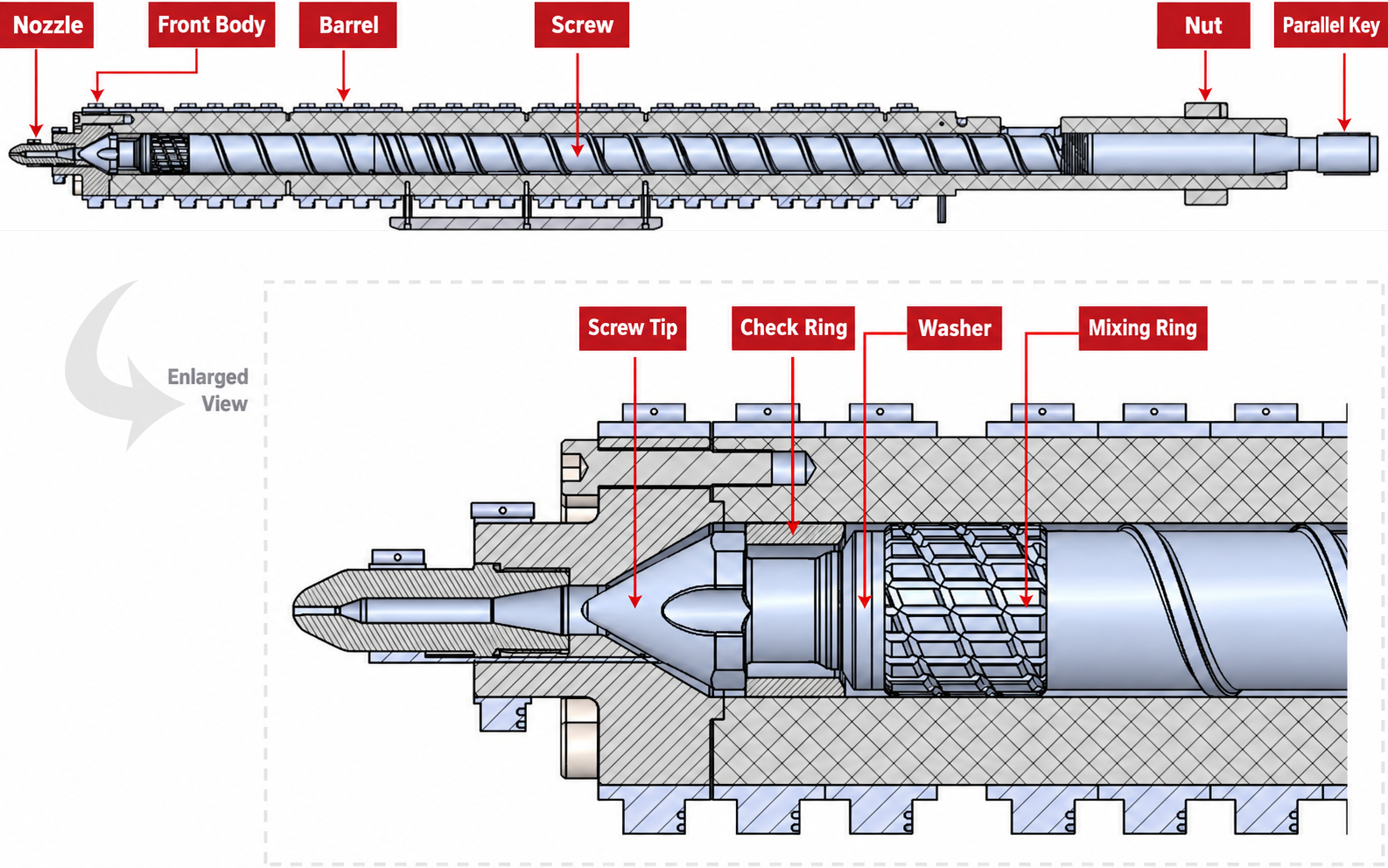
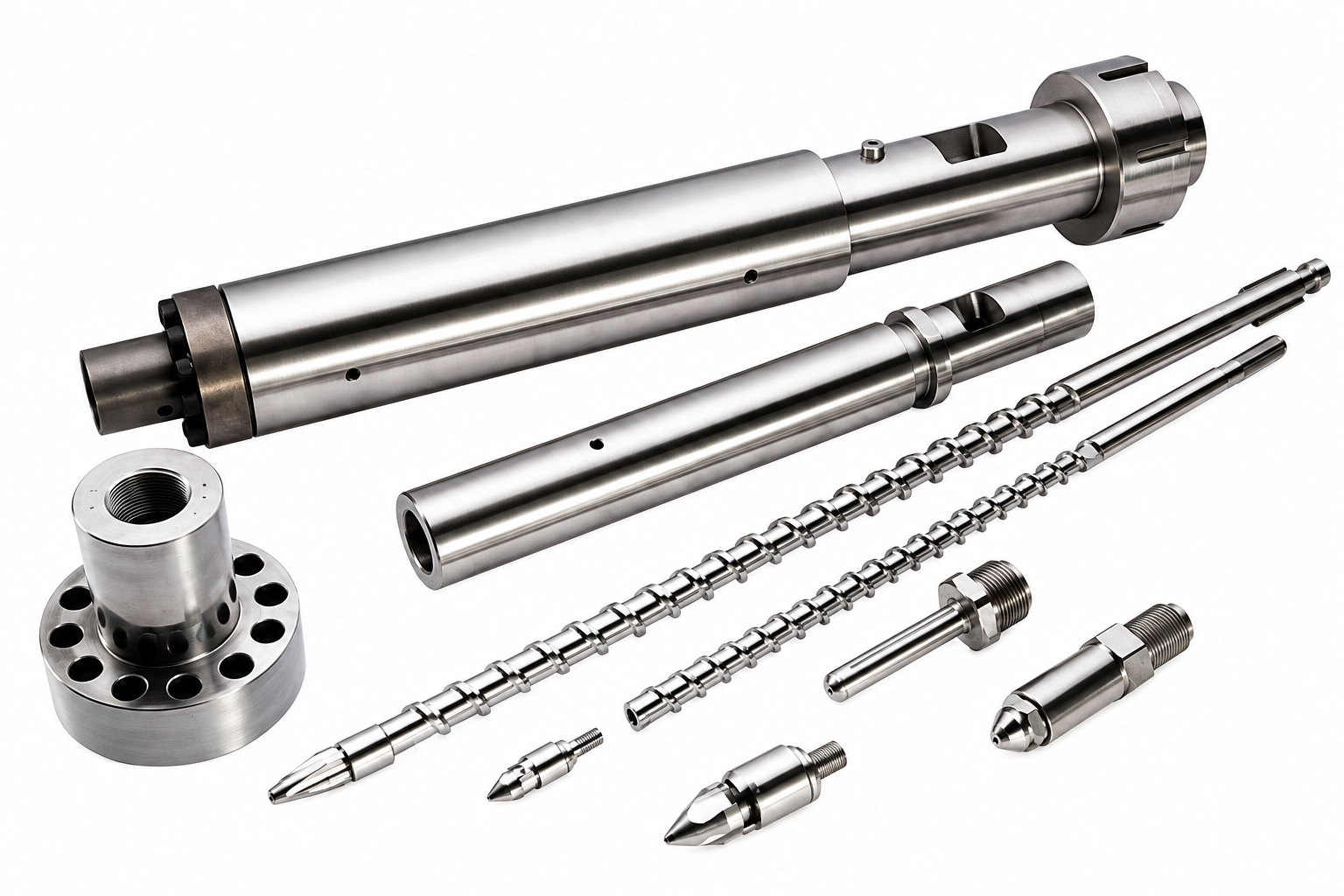
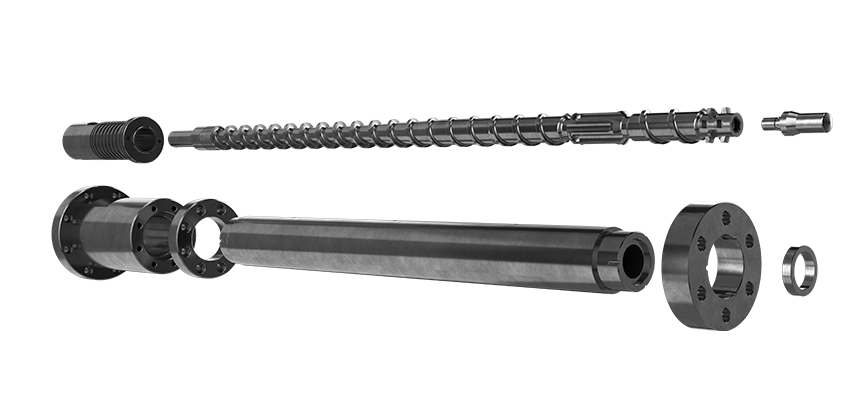
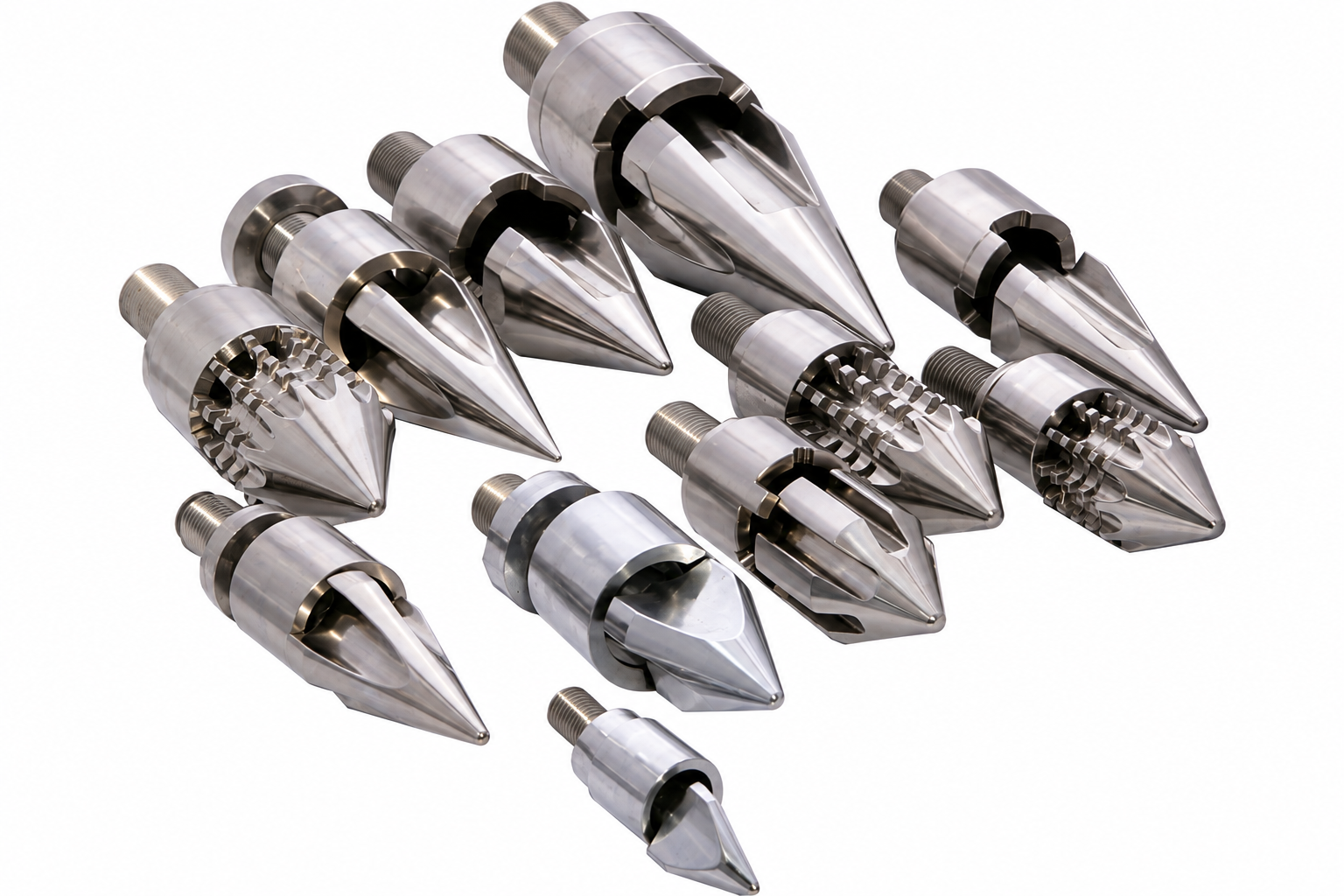
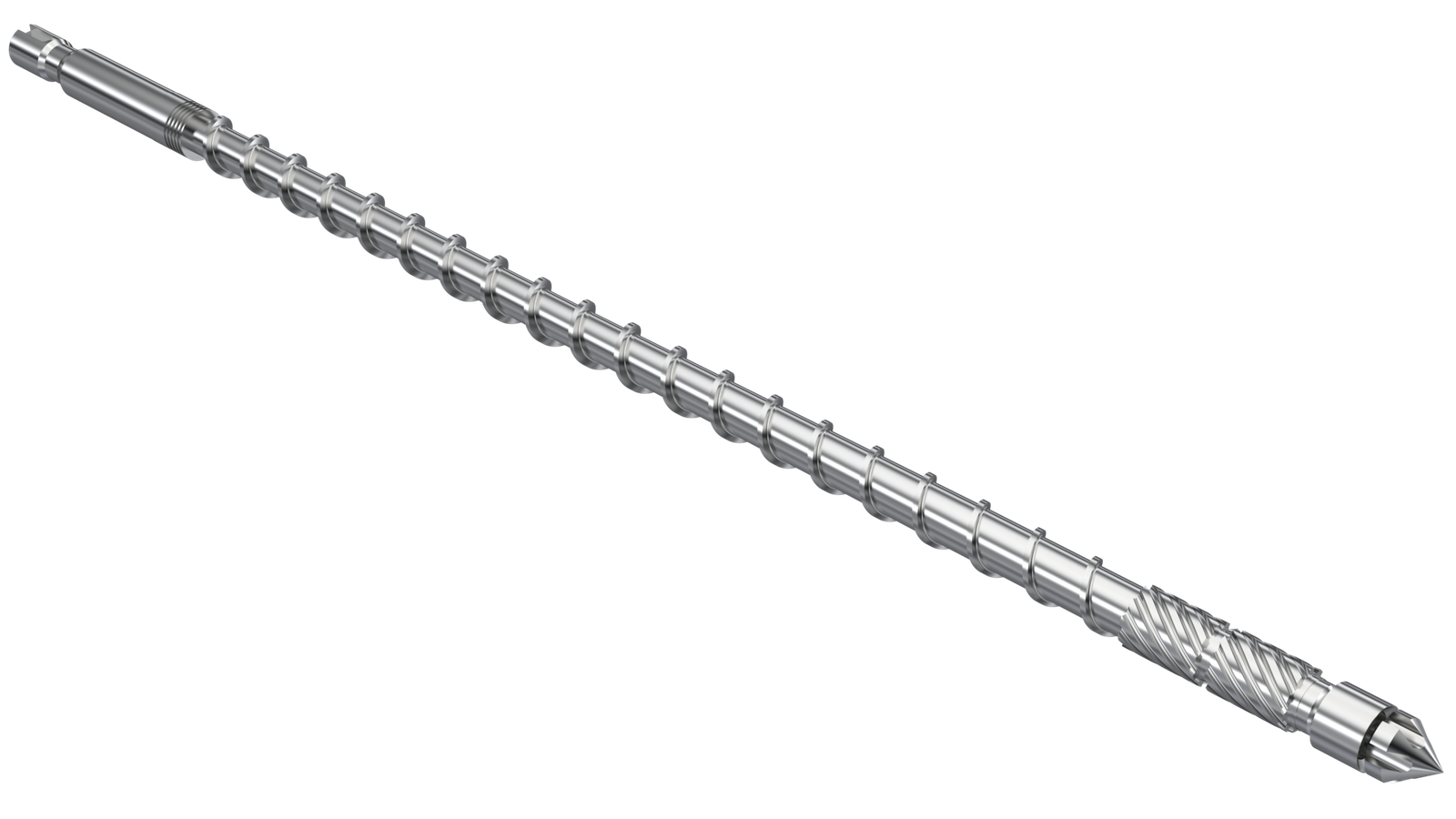

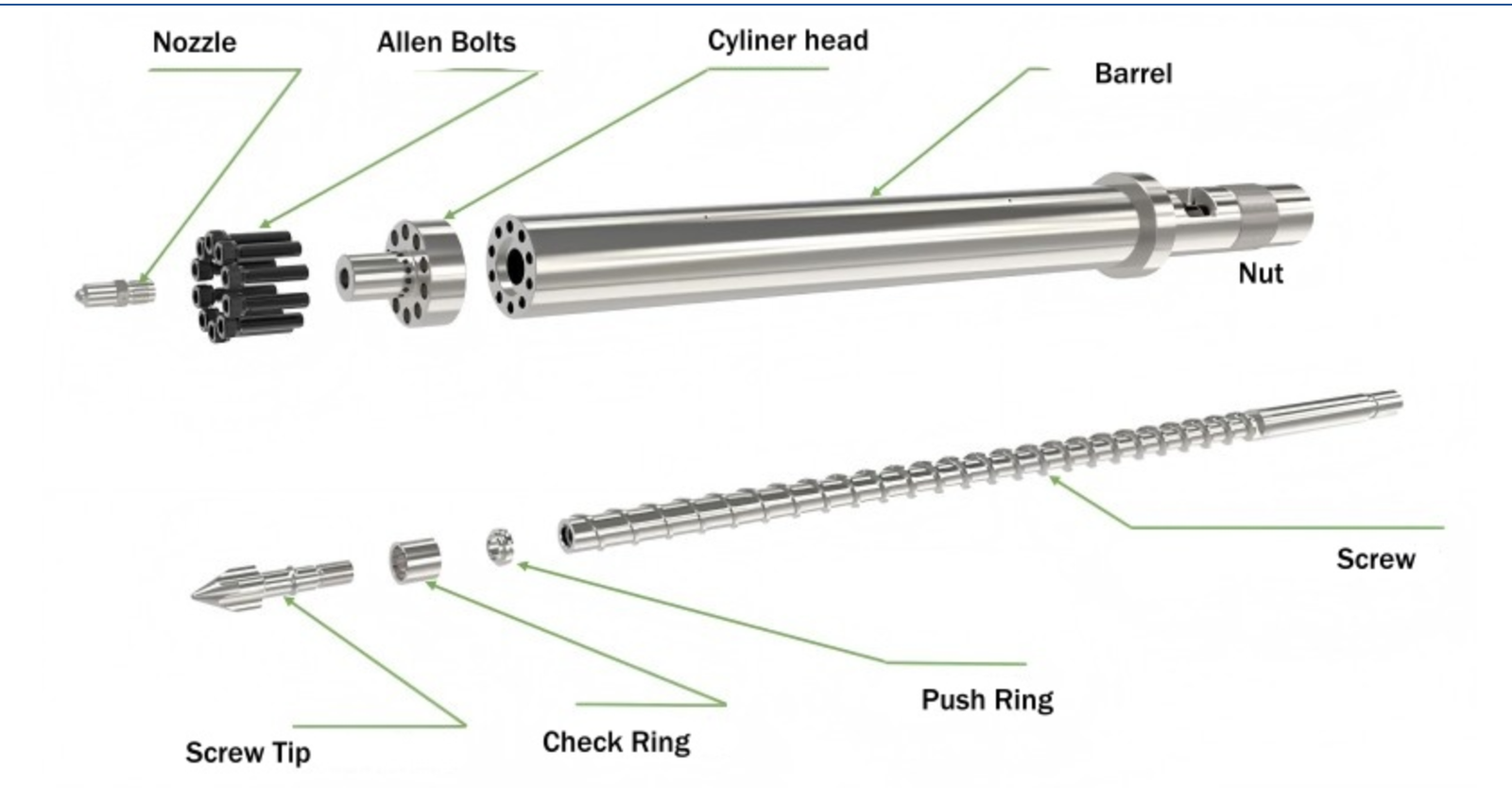

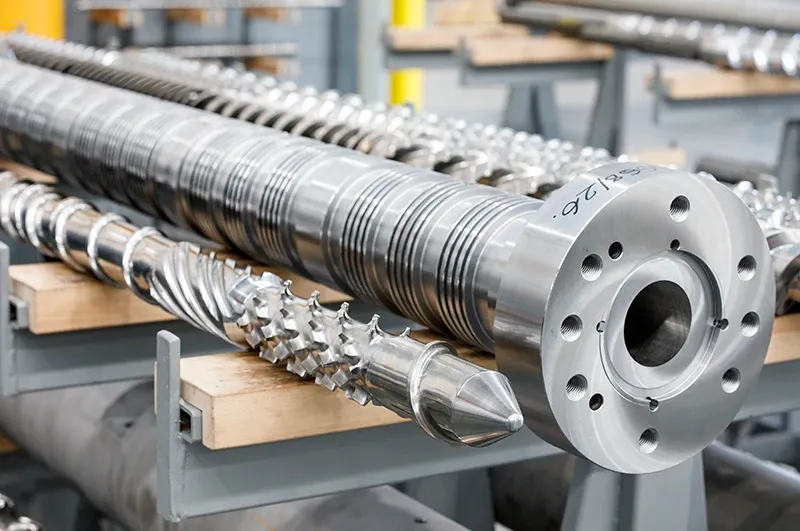
Injection screw and front-end component views. Final parts follow the approved machine specification.
Use the arrows or select a thumbnail to browse all 8 photos. Click the main image to view full size.
INJECTION MOLDING COMPONENTS
Injection Molding Screw & Barrel
Stable molding starts in the plasticizing unit. YINGDA matches the screw and barrel to your machine, resin and shot requirements, then confirms material and surface treatment against the expected wear conditions.
Replacement components can be reviewed from a machine model, drawing, sample, clear photos or measured dimensions. Options cover general-purpose resins, engineering plastics and filled compounds. Injection molding screws and barrels are available individually or as matched sets, according to your machine and replacement requirements.
Machine matched
Drawing or sample
HV900–1000
Nitrided hardness
0.5–0.8 mm
Nitriding depth
Steel, treatment, dimensions and inspection criteria are agreed for each order before manufacturing.
Explore: Applications · BM1 & BM2 Wear Technologies · Custom Design & OEM
Technical guide: How to choose A, B and C injection molding screws
PRODUCT OVERVIEW
A better match for the plasticizing unit
The screw conveys, melts and mixes resin while the barrel provides the working bore. Together they prepare a consistent melt and measured shot before injection into the mold.
A replacement should match more than diameter. YINGDA reviews the injection machine, screw profile, L/D, shot requirement, resin, filler content and existing wear before proposing construction.
If the original drawing is unavailable, machine details, photos and a worn component can start the review. We identify which measurements still need confirmation before production.
WHERE IT WORKS
Where injection screws and barrels are used
The selected steel, geometry and treatment depend on the resin and operating conditions. Typical plasticizing duties include:
PP & PE molding
ABS components
PC & PA parts
Glass-filled resins
Recycled compounds
General molding units
APPLICATION SUPPORT
Problems worth checking before replacement
A worn component may be only part of the cause. Material condition, temperature, back pressure and machine settings should also be checked.
Shot size varies
Screw and barrel wear, the check ring and back-pressure settings can affect shot repeatability.
Melt quality is uneven
Screw geometry, residence time, resin condition or process temperature may be involved.
Black specks appear
Stagnant material and overheating can cause degradation; inspect the working surfaces and process settings.
Filled resin causes fast wear
Glass fiber and mineral fillers raise abrasion, making steel and surface selection more important.
Part dimensions are unknown
A machine model, sample, photos and key measurements can establish a practical review path.
PLASTICIZING BASICS
How the screw and barrel affect each shot
During recovery, screw rotation conveys and plasticizes resin while melt accumulates ahead of the screw. Geometry and working clearance influence mixing, recovery time and melt consistency.
During injection, the front-end non-return assembly helps limit backflow so the prepared melt can be delivered toward the mold. Its fit should be considered alongside the screw and barrel.
A replacement should therefore be reviewed as a working assembly: screw, barrel and front-end parts. A worn check ring or mismatched bore can affect shot consistency even when the new screw material is correct.
TECHNICAL RANGE
Full technical specifications
The values below are available specifications and options. The approved drawing and order define where each material, treatment and acceptance value applies.
PARAMETER
VALUE / OPTION
Product type
Screw and barrel for injection molding machines
Machine
Injection molding plasticizing unit; connection dimensions confirmed per model
Processed resins
PP, PE, ABS, PC, PA, recycled and filled compounds, subject to formulation
Available steels & alloys
38CrMoAlA, SKD61, Cr12MoV, SACM645, nickel-based alloys and GH113
Nitriding hardness
HV900–1000, where specified
Nitriding depth
0.5–0.8 mm, where specified
Quenching hardness
HRC55–62, where applicable
Nitriding brittleness
≤ Grade 2, where specified
Surface roughness
Ra0.4, where specified
Screw straightness
0.015 mm, where specified
Chrome hardness
≥950 HV, where plating is specified
Chrome layer
0.05–0.10 mm, where applicable
Alloy layer depth
0.8–2.0 mm, where applicable
Machine matching
Model, drawing, sample, photos or measured dimensions
Design inputs
Resin, filler content, screw diameter, L/D, shot requirement and wear
Treatment options
Nitriding, hard chrome plating, bimetallic layer and alloy spray welding
Customization
Geometry, material and surface treatment to the approved order
Acceptance
Final dimensions and specified surface values confirmed before production
Final dimensions, steel, treatment and inspection requirements are confirmed against the injection machine and processed resin before production.
Injection Screw Diameter & PS Shot Weight Reference
The table below compares A, B and C screw options for selected Haitian Mars V machines. For example, MA1600V/570 lists 40 mm / 229 g, 45 mm / 290 g and 50 mm / 359 g. Weights use polystyrene (PS); values vary by machine and material.
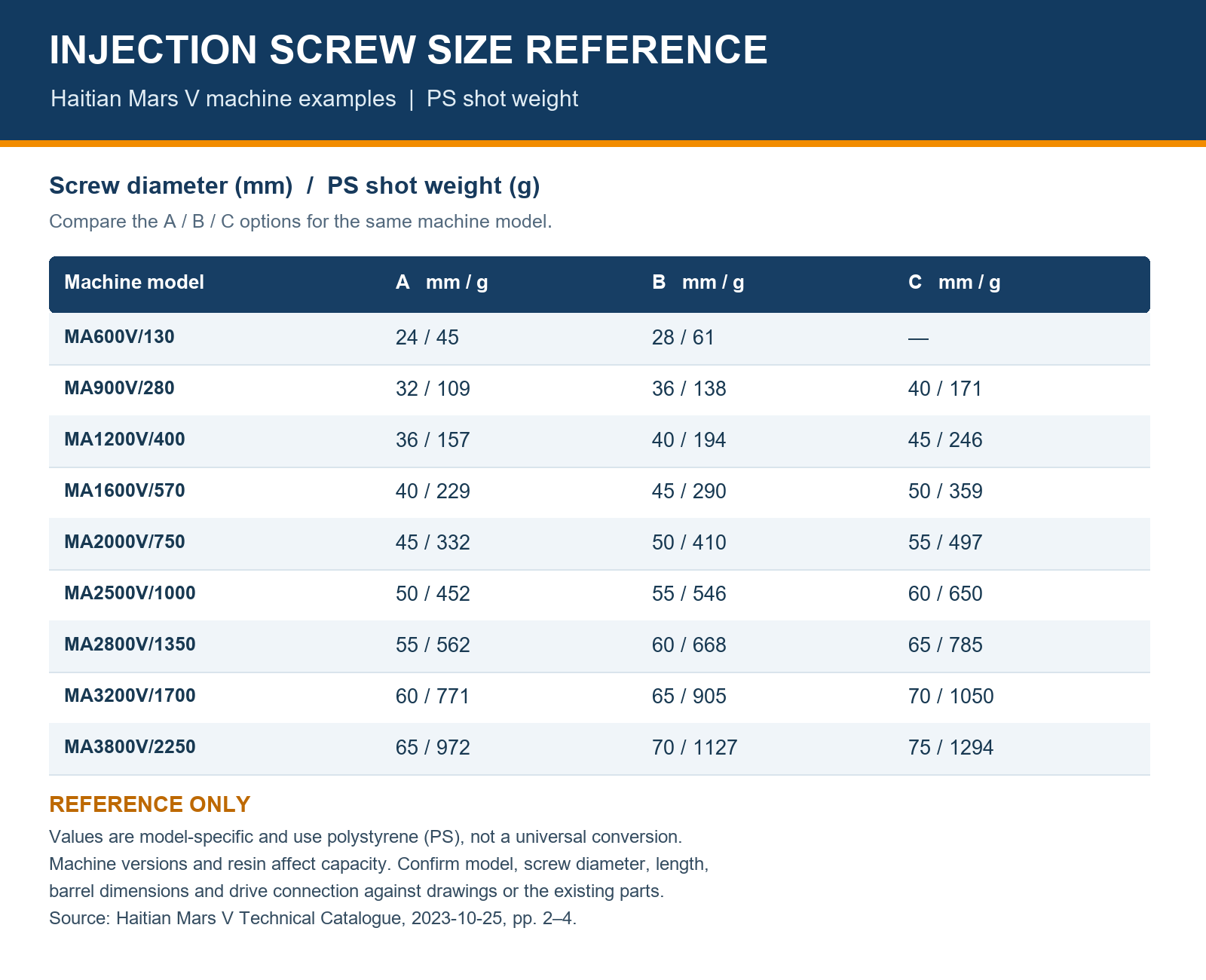
Open the chart at full size · Source: Haitian Mars V technical catalogue (2023-10-25), pp. 2–4
Reference only. Check the machine model, screw diameter, length, barrel dimensions and drive connection against the drawing or existing parts before ordering. The catalogue does not provide screw or barrel lengths in this chart.
General Injection Screw & Barrel Size Reference
Use this chart to compare approximate shot weights with screw diameter and length, and barrel outside diameter and length. For a replacement that fits your machine, please share your machine model, drawing or measurements of the existing parts.
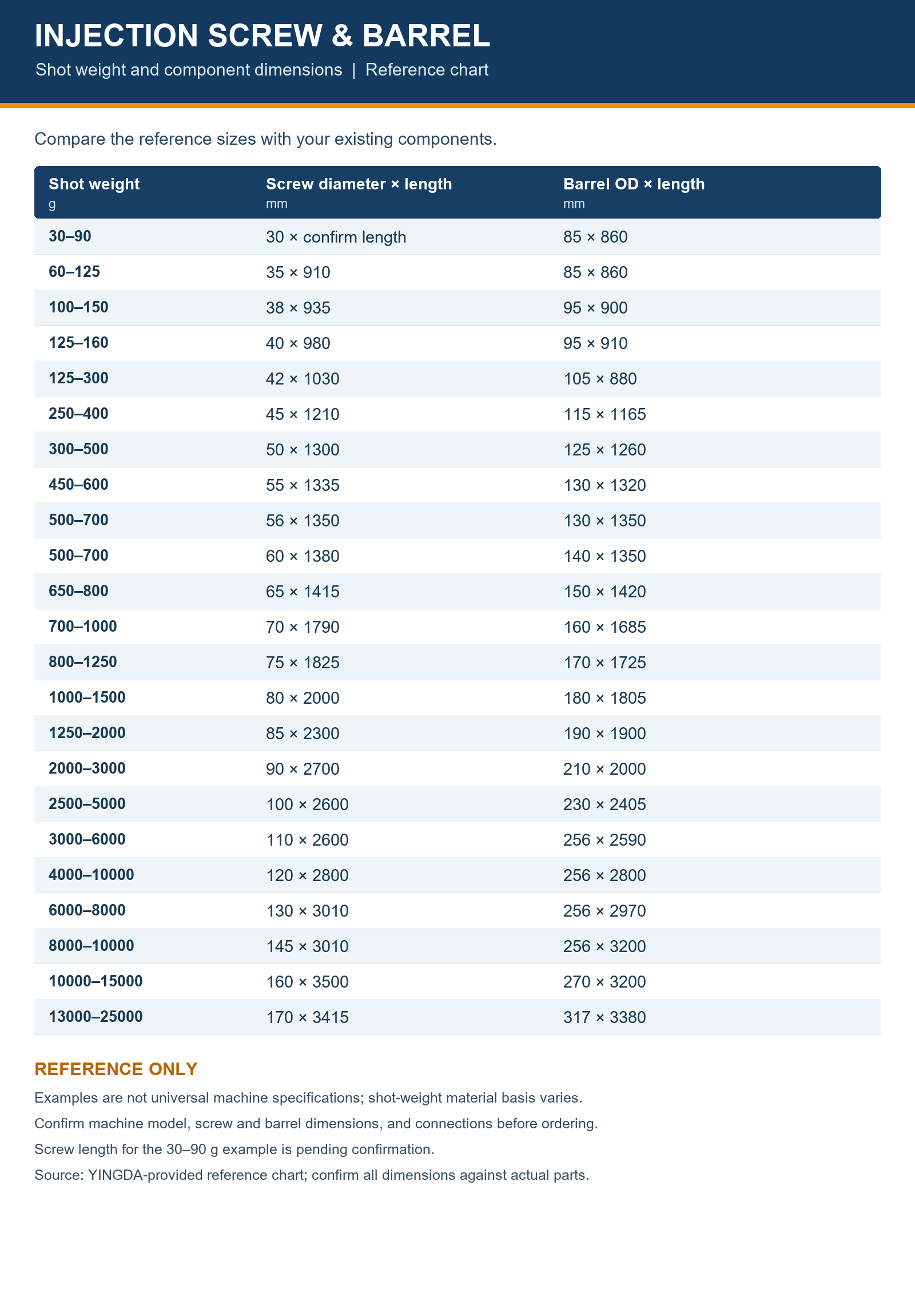
View full-size chart
Dimensions are for reference. We confirm the final specifications and connections with you before manufacturing.
CHOOSE FOR THE RESIN
Steel and surface options
General resins and abrasive compounds place different demands on the working surfaces. YINGDA selects a construction for the machine and material rather than treating one steel as universal.
MATERIAL OPTIONS
38CrMoAlA nitrided steel
A common base choice for screw and barrel components. Specified nitriding can reach HV900–1000, 0.5–0.8 mm depth and brittleness no higher than Grade 2.
SKD61 & Cr12MoV tool steels
Tool-steel options are reviewed for the component design, processing temperature, wear pattern and required heat treatment.
SACM645 & special alloys
SACM645, nickel-based alloys and GH113 are available for applications that call for a different nitriding, wear, corrosion or heat-resistance approach.
SURFACE & WEAR OPTIONS
Nitriding
A hardened working surface with specified hardness, depth and surface finish. The approved order defines the acceptance values.
Hard chrome plating
An option where the component and resin call for it. Available catalog values include hardness of at least 950 HV and 0.05–0.10 mm layer thickness.
Bimetallic or spray-welded alloy
An alloy working layer may be considered for abrasive or demanding compounds. The application area and 0.8–2.0 mm layer depth are confirmed per design.
Inspection follows the agreed drawing
YINGDA confirms critical dimensions, straightness, surface finish and specified hardness against the approved drawing and order before acceptance.
MADE TO FIT
Built for your injection machine
The replacement is designed around the plasticizing unit, resin and shot requirement. Drawings are helpful; a machine model and measured sample can also start technical review.
Machine interface
Screw diameter, barrel bore, L/D, mounting and connection dimensions.
Screw profile
Conveying, compression and mixing geometry reviewed for the resin and required shot.
Steel & treatment
38CrMoAlA, tool steels, nitriding, chrome plating or alloy options as specified.
Front-end fit
Screw tip, check ring and related front-end interfaces checked against the unit.
Replacement from a sample
Machine data, photos and measured wear parts used to confirm missing drawing details.
FOR A USEFUL QUOTATION
What helps us quote accurately
Send what you have now. We can identify any missing measurements during the technical review.
01 Injection machine model and plasticizing unit
02 Screw diameter, barrel size and L/D if known
03 Resin grade, glass fiber or other filler content
04 Shot requirement and current molding issue
05 Existing wear, surface damage or leakage symptoms
06 Drawing, photos, measurements or worn sample
Send Drawings for ReviewTHE YINGDA COMMITMENT
Agree the specification before machining
Engineering review
We connect resin, shot requirement and current wear to a practical screw and barrel specification.
Inspection to agreed criteria
Critical dimensions and surface values are checked to the drawing and order requirements.
1-Year After-Sales Quality Assurance
We provide one year of after-sales quality assurance. See the coverage details below.
Quality Assurance Coverage
Period: Our one-year after-sales quality assurance begins on the date the screw and barrel are formally put into normal use; shipping time is not counted.
Covered issues: Under normal operating conditions, it covers product quality issues including abnormal wear, screw breakage, and failure to reach the agreed output when first put into operation.
Free replacement: For a covered product quality issue, YINGDA provides a new replacement product at no charge.
Coverage limits: Gradual output decline caused by normal wear over time is not a product quality issue. Human-caused breakage and damage from foreign objects are excluded.
COMMON QUESTIONS
Injection molding screw barrel FAQ
What should be matched besides screw diameter?
The machine connection, barrel bore, L/D, screw profile, shot requirement and front-end fit all matter. Resin and wear conditions guide the steel and treatment choice.
Can we start from a worn screw without its original drawing?
Yes. Send the machine model, photos, a sample and any measured dimensions. YINGDA will identify the missing details that need confirmation before manufacturing.
What changes when molding glass-filled PC or PA?
Filler content, process temperature and expected wear need review. Geometry and a suitable steel or alloy working surface are selected against those conditions.
When should an alloy layer be considered?
Highly abrasive or filled compounds may justify a bimetallic layer or alloy spray welding. We compare those options with nitrided steel for the actual material and duty.
Which resins can these components process?
Projects can be reviewed for PP, PE, ABS, PC, PA, recycled resins and filled compounds. Final construction follows the formulation and machine conditions.
Can hard chrome plating be specified?
Yes, where suitable for the component and material. The approved order defines the plated area, thickness and hardness requirements.
How are the final tolerances agreed?
Critical dimensions, straightness, roughness and treatment values are written into the approved drawing or order before production and inspection.
What is enough information for an initial quote?
A machine model, resin, part photos and the problem you want to solve are enough to begin. A drawing, sample and measurements help us confirm the final specification.
ALSO EXPLORE
Other screw and barrel components


WORK WITH YINGDA
Let's Build Around Your Process.
Share your drawing, sample or machine details. We will review the fit, materials and working conditions, then discuss screw and barrel options that make sense for your production and budget.
✓ Direct factory communication
✓ Engineering-reviewed specifications